
Doubt & Dissatisfaction
Every uncomfortable visitor offers us the chance to know ourselves better
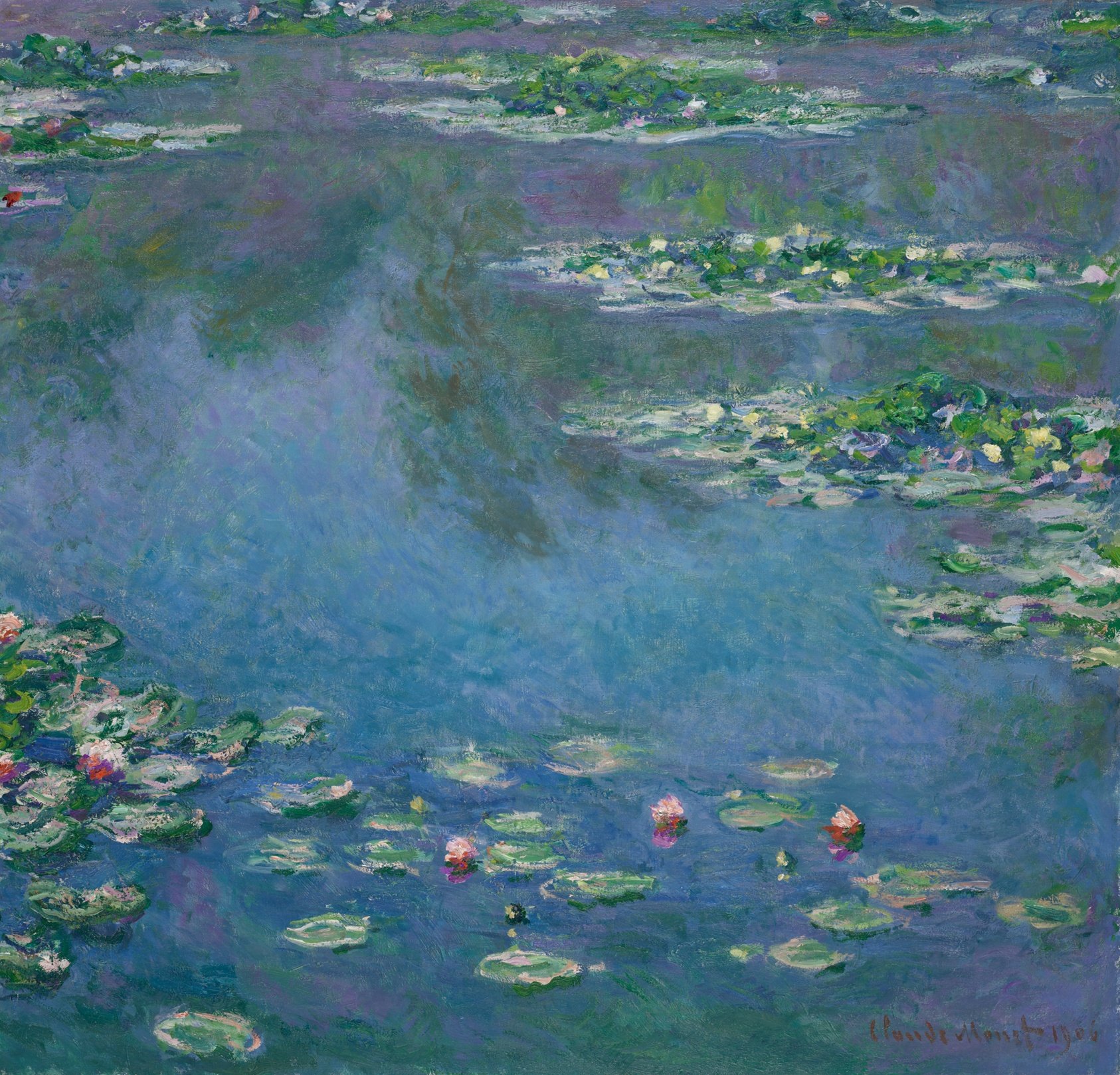
Water Lilies, Claude Monet (1906), courtesy of AIC
Leaving a bad-fit job, a dysfunctional relationship, or a misaligned place and entering something new can be liberating. Following one’s own compass can bring with it energy and empowerment. But what about the times when it doesn’t feel this way? What does it look like for a person whose left an abusive situation 6 months later? The hope is that they are, of course, happy. That they are satisfied with their decision, and that, each day, they receive a little sign from the Universe that affirms the choice that they made was the right one for them.
Yet, how often do we assume that life instantly gets better after exiting toxicity or unhappiness? How often do we think that people become successful because they believed in their decision the whole time? How often do we guess that the right decision feels right at all, or that making a change leads to the end of want?
Of course we hope that things get better, that a decision feels right, healthy. At the same time, it’s not a math equation. Our hearts don’t owe us immediate satisfaction in response to our actions, even those we do out of care for ourselves. It can be complicated, an outcome that opposes neat and tidy epilogues. Often, it’s a more ambivalent story. The message that we “should” be happier now, or that an absence of faith is somehow a personal failing, makes for a pretty good silencer.
Did I make a mistake in leaving the soulless, corporate job that offered me a cozy salary, benefits, a retirement? Am I perpetuating my own struggle by holding onto virtue over security? Every so often I miss that old friend I ended my relationship with…was I wrong to cut the cord? Was moving away to a new place foolish? Was I too hasty? Was I reckless? Was I shortsighted? Is the project I am working on going to be valued by others? Was…was I wrong? Am I doing this life the right way? Do I even know what I am doing?
Doubt doesn’t always ask the most apt questions. And of course it doesn’t—doubt is a tangent of fear, and fear is here to keep us safe and insulated. Fear is physiologically trained to cast the world in black-and-white, right-or-wrong because, when we’re afraid, we must be capable of making quick decisions.
Except many of our choices aren’t meant to be made quickly, and then will not settle quickly. There are no right or wrong choices; there are only choices. This is true for the job offers we take, the partners we commit to, the artistic mediums we invest in, where we move.
Doubt and dissatisfaction are worth exploring. Maybe they have shown up to tell you a choice you’ve made is misaligned but maybe they’ve shown up to show you that you are simply not certain yet. Uncertainty is no foe.
Great teachers and creators have broken this ground before. They feel it, too. They have continued to create alongside the doubt.
It is not eloquent or necessarily enlightening, however true: trust isn’t easy. Decisions aren’t often easy. Creative decisions, down to which size brush to use, or which hue to pick, where to start. Practical decisions, like what to do for money, where to live, the people you want to be surrounded by, what to eat for dinner, how to spend a day, how to use our gifts, when to leave, when to stay.
Barry Schwartz, a psychologist with expertise in decision-making, wrote this in the book The Paradox of Choice: “Learning to choose is hard. Learning to choose well is harder. And learning to choose well in a world of unlimited possibilities is harder still, perhaps too hard.” Another point that Schwartz makes is that, as much hand-wringing and brow perspiration we do in decision-making, we experience just as much anguish, if not more, when we are not given the freedom to choose at all. This underlines the fact that the typical person’s relationship with choice, and with doubt, is complicated. How could we not get stuck sometimes in dissatisfaction and uncertainty?
We grieve the choices we do not make. We grieve the choices we do make, even when they are beneficial. We grieve the time spent in indecision. We grieve the responsibility of choice and the absence of choice. We grieve the fact that we cannot know where our paths will lead. We are afraid of wasted effort. We are afraid of wasted life.
I said earlier that doubt asks the wrong questions, but I do believe in its power to lead us to better ones. Schwartz writes: “Knowing what’s good enough requires knowing yourself and what you care about. So: think about occasions in life when you settle, comfortably, for ‘good enough’. Scrutinize how you choose in those areas, then apply that strategy more broadly.”
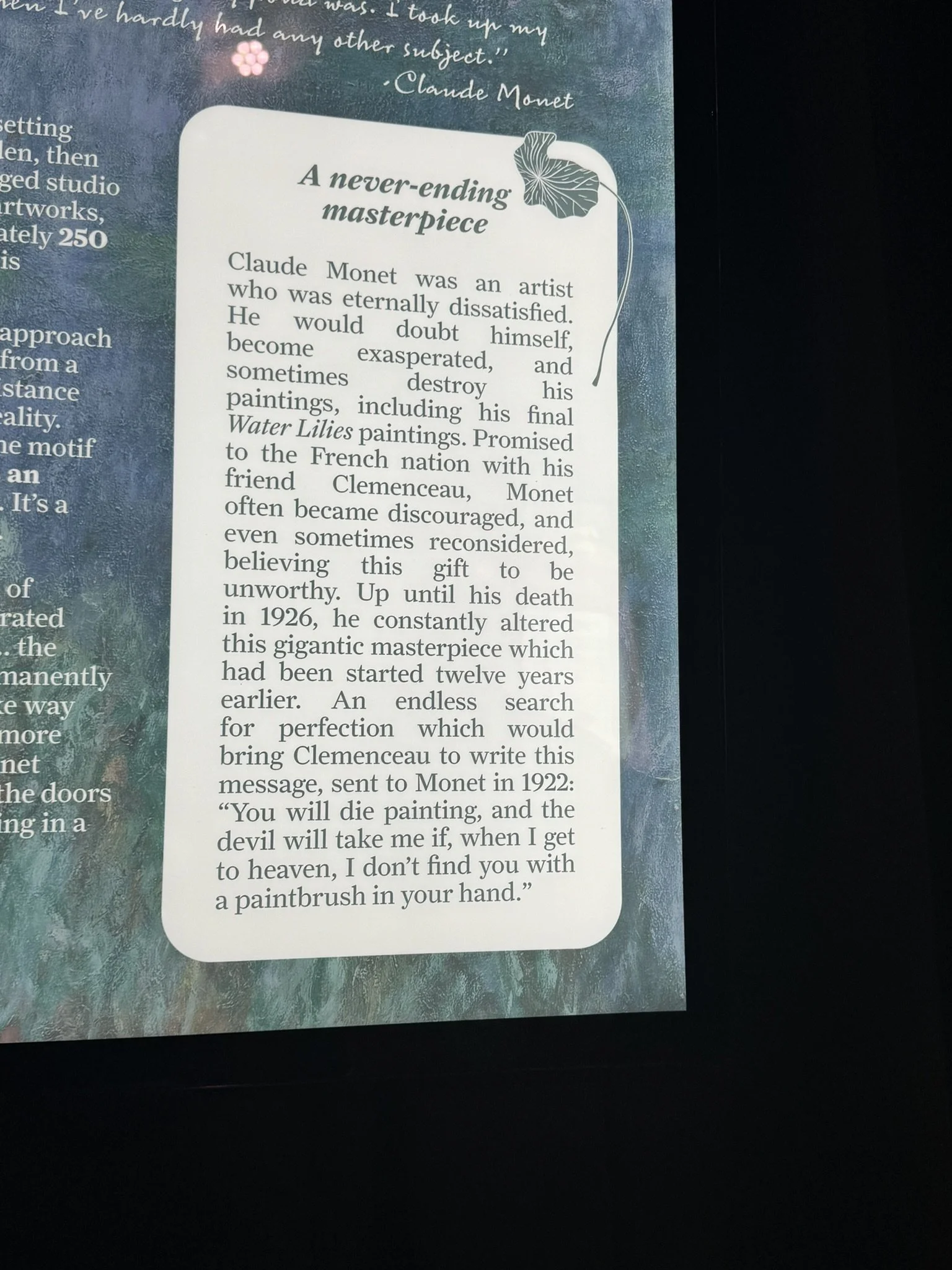
Could it be that doubt points our attention to the things that feel most important to us? Could it let us know when we’re demanding perfection from ourselves, as it did for Monet? What could it be saying about belonging, and the stipulations we experience—or create—for being accepted or valued?
Here is another quote that I love very much, by Ocean Vuong:
“I was loitering on the edge for so long, never thinking that I had the courage to do it, and I still feel very hesitant all the time about whether I belong here, whether I should be doing this. I’ve learned that doubt is a source of energy. You don’t always have to be certain. We live in a culture that fetishizes certainty. ‘What’s your stance? What’s your position?’ As a writer, luckily, I just have to have questions, and I get to build a landscape where I get to explore them. We’re complicated. We are hurricanes in a way, you know?”
If you’re experiencing doubt or dissatisfaction in your life, what do you sense the underlying question of it is? What has it told you about your passions? What has it told you about place? What is it, really, that you are second-guessing?
Teachers
Highlights:
“Grief is not just an emotion, it’s a core human faculty. And without that faculty or without that skill set, we won’t know how to show up and stay present to our lives or those that we care about.”
“Often the Western culture we’re in, or industrial culture, is very much like, ‘I did it. Now, what’s next? Let’s move on. This is what progress is.’ I know many people that can feel a lot of self-blame, like, ‘Something is fundamentally wrong with me, that I can’t move forward and feel fine.’”
“They apologize for not progressing. I say, let’s disavow that as a goal. Soul doesn’t give a shit about progress. It wants to feel fully entertained, that of what’s possible in the terrain of soul will be welcomed: grief, tenderness, sadness, loneliness, longing, beauty, imagination, creativity, you know, friendship. All of the things that matter to soul, if we just notice that, our lives begin to get much fuller, much richer. Then, the idea of progress becomes less and less fascinating. You know, again, I think progress rises out of the feeling of emptiness. We’re always trying to get to some place better. As if where we are, what was is no good, not enough.”
Catalysts
Who are your models for being? Pick one artist, creator, athlete, figure—anyone who has created something, even if it’s just one thing, that has moved you in any way—and do a tiny research project on them.
What did they struggle with, and how did they deal with it? Does doubt show up in their work, and if so, how? How might their work be different if they did not struggle in their own particular way? What do you find most compelling about this person or what they’ve done?