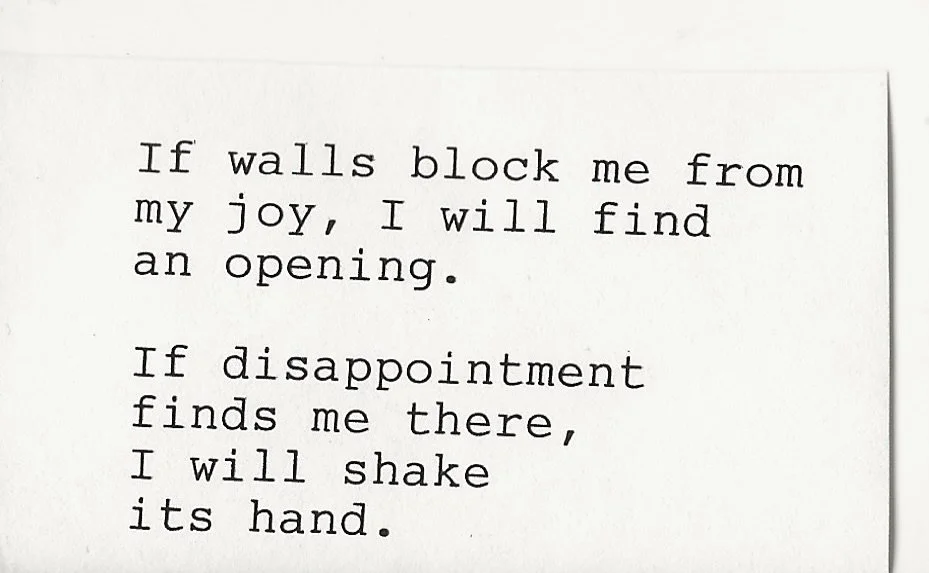
A Series of Unnamed Griefs, pt. 1
[First unnamed non-death grief]
n. the sensation of wanting to feel happiness, but holding back; bracing, white-knuckled and warning: “I can’t let myself get too excited,” and “I can’t be too happy” and “the other shoe will drop” and “something is bound to go wrong…something always goes wrong” and “I should have known”'; restraint, anticipatory disappointment, a cage of one’s own construction, a fear that has a history, a preemptive defeat, the empty-stomached desire to hide from success (and thus, the possibility of failure), a defense against vulnerability and humiliation, pessimism, desensitization, self-deception, a sense of being blanketed by past hurts, a shield (barrier against pain and joy).
Perhaps it creeps up during an interview that is going well after a string of rejections. The moment you’ve submitted your written work to a potential publisher. Walking home after a date, viciously shooting down all the butterflies as they begin to stir. A moment of budding contentment, right as you begin to think, “Maybe. Maybe my life is good right now”. Springs out of your throat as you sit with a table of friends, laughing, right on the precipice of having a good time. It whispers in your ear to shrink your heart away from investment. It turns down invitations. It keeps you from saying, “I care” in a multitude of languages.
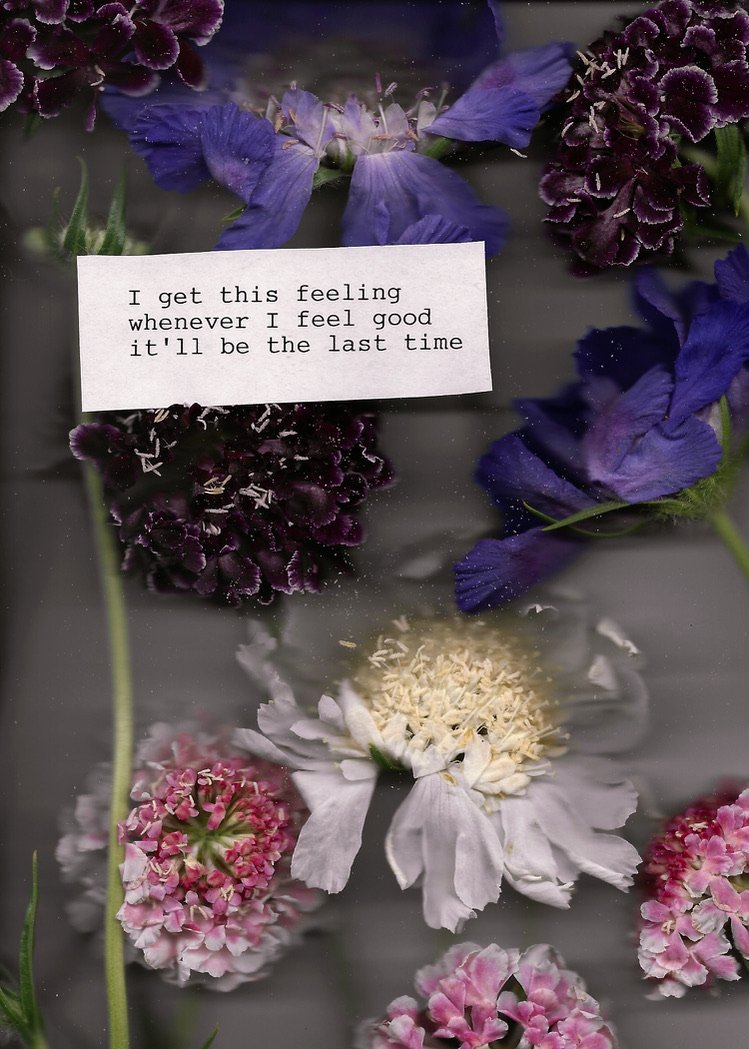
Words in this image are by Phoebe Bridgers, from the song “ICU”.
Why grief? Because this experience is one that seems, to me, steeped in the experience of loss. Fear, too, absolutely, fear. We often do not give up on excitement right from the gate; we give up when we have been shown time and time again that we will not get what we want. It seems easier to blame ourselves, to see ourselves as having been foolish, rather than to honor the fact that we cannot know all ends, that it is not wisdom to pretend that we can. Instead of accepting the risk of lost potential, we self-protect by training ourselves not to want at all. Not to love. Not to melt into moments where everything actually feels okay.
What parts of life are we rejecting when we shield ourselves from hurt? What happens when we deny ourselves giddiness? When we deny ourselves disappointment? Does the bracing ever do any good? Can we appreciate the parts of us that wants to keep the heart protected, while simultaneously asking them to relinquish control?
What is the worst that can happen if we let ourselves be foolish? The answer to this will likely point you back toward your grief.
A Poem
‘Tis a fearful thing
to love what death can touch.
A fearful thing
to love, to hope, to dream, to be –
to be,
And oh, to lose.
A thing for fools, this,
And a holy thing,
a holy thing
to love.
For your life has lived in me,
your laugh once lifted me,
your word was gift to me.
To remember this brings painful joy.
‘Tis a human thing, love,
a holy thing, to love
what death has touched.Yehuda HaLevi, "Tis a Fearful Thing"