I’m Allowed To Change My Mind
And so are you!
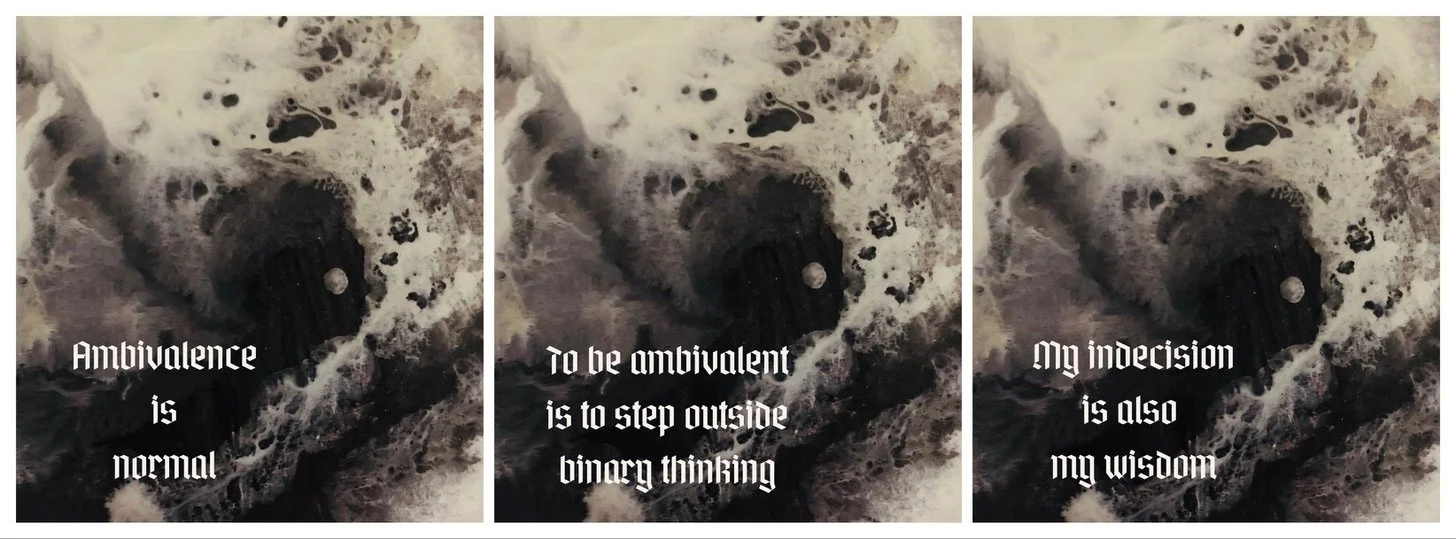
At times, I’ve been called indecisive, as though that summed up my whole personhood. It’s not a wrong assessment, but it’s not comprehensive. I am indecisive—rather, I allow myself to change my mind, and am much more likely to have mixed feelings toward something rather than confirmation. There is so much shame imbedded in this trait, which deserves to be challenged. Even now, I am having difficulty getting the words out and figuring out how I want to talk about this, even though this trait and experience is one that I’ve come to befriend and trust in.
Big picture, what does research say about it? Researchers at Queensland Brain Institute have found that, because a change of mind usually follows the recognition of a mistake, we have a higher likelihood of successful outcomes by making a different decision. This pattern recognition followed by behavior change allows us to improve, to grow from what we see as an error. The more likely we are to change our minds, the more likely we are to accurately assess how well we are performing, indicative of a keen sense of metacognition (“thinking about thinking”). However, a key element discussed in this research is that people do not like to change their minds and will be highly resistant to switching to a new choice. As indicated, though, this resistance is counterintuitive to better outcomes.
Does that resistance have to do with learning style? Does it come from our socialized core beliefs about image—who are we to other people if we are prone to change? When we recognize a mistake, is it really more comfortable to live with that mistake than it is to change course?
A 2017 study by Frimer, Skitka, & Motyl suggests that we will often discredit, ignore and minimize facts and data that conflict with what we think is right (even when we are, in fact, wrong or misguided). By doing this, we avoid cognitive dissonance, which is the term used to describe the state of having inconsistent thoughts, beliefs, or attitudes, especially as relating to behavioral decisions and attitude change. Cognitive dissonance is generally understood to be an uncomfortable state to be in. We prefer commitment to our ideologies and beliefs, and we are highly susceptible to confirmation bias, which clouds the ability to take in new information that can inform decision-making.
Research by Hohnsbehn, Urschler & Schneider titled “Torn but balanced: Trait ambivalence is negatively related to confirmation” acknowledges that ambivalence is typically viewed as having negative impacts on decision-making, but refutes the stance. This piece supports findings that ambivalence (as in, the experience of having a mix of both positive and negative feelings or attitudes) contributes to reduced cognitive rigidity, increased insight, accurate discernment, and better decision-making. The ability to personally experience ambivalence suggests “that it broadens cognitive processing”, and those who experience ambivalence are more open to hearing and considering alternate perspectives, which could potentially have supportive influence on the depth of our personal relationships.
I revisited a journal entry I had made last year when I was struggling to accept some leap-frogging I was doing at the time. I talked about the desire not to jump around from thing to thing, but I also acknowledged how beneficial the experience had been in terms of refining what I wanted. “…in case I get [a future], I want to build a joyful one. I want it to be mine and belong to me.” I build this joyful future (as well as a joyful now) piece by piece by using my critical thought. Because my decisions are never set in stone, I am able to course-correct when things don’t feel right, and that can be a strength.
I’ve also just started Michael Pollan’s Netflix series, “How To Change Your Mind”. While it’s specifically focusing on changing perceptions of psychedelic drugs, it’s affirming to watch and to consider how shifting a worldview can lead to more transcendent experiences. It’s an invitation to embrace some of the more mysterious and nuanced facets of living on this planet and being a human.
May we all meet ourselves with enough courage, tolerance for discomfort, curiosity, and interest to allow ourselves to change our minds when it’s warranted.