
Plant & Flower Allies
How flowers helped save my life
In 2015, my mother was killed by her mental illness.
As I write this, I have years of self-work and professional help anchoring me. I now have a lot of understanding and insight into her death. But when it first happened, I did not have that. I was 25. When it happened, it felt more like a natural disaster, obliterating my foundational understanding of myself, the world, and the person I knew my mother to be. For the first year or two after she died, I experienced a plethora of trauma-related symptoms.
One aspect of my response that troubled me greatly was a deficit in memory. Before this, my memory had always been sharp, keen, eerily vivid. It turned mushy, fuzzy and disoriented, leaving me unsure of what had even happened the day before.
This is where plants and flowers come into focus.
Going to the grocery store in the midst of grief is specifically challenging. The absurdity of picking out toilet paper when there’s a dark, pulsating cave in your chest that only you can see or feel has a way of disrupting the theater of everyday tasks. When I had to go to the store, I felt a gravitational pull toward the floral department, and soon started filling the cart with flowers. My first favorites were deep, near-black purple calla lilies. I will always remember this.
I built a file cabinet in my brain, where I archived all the names for flowers that I learned. A vague knowledge (rose vs. tulip vs. carnation) began to surge with complexity (alstroemeria vs. protea vs. ranunculus). I savored the words and the growing thing attached to them. Try to say “chrysanthemum” and tell me there is no pleasure in it. I started to learn about the fundamentals of arranging, and, no matter how bad or weird my initial arrangements looked, creating them gave me at least 20 minutes where I could think of nothing else but what my hands were doing.
My therapist at the time recommended the book, The Language of Flowers. My interest grew thick roots. I learned, for the first time, what was growing season by season. This oriented me to time and space, and gave me a new sort of biological clock to live by (and by “new”, I mean ancient, worldly and deep). I would walk through my neighborhood and anchor myself there by identifying every plant and flower that I could recall.
Many people feel like flowers are unappealing because they smell, they just die, they are something else to take care of. That’s valid, but these are the things I love most about them. Flowers taught me how to turn soft toward death. They help me to better accept it. They taught me how to nurture something that, like us really, is already on its way out. Flowers are perpetually telling us that they are dying, and teaching us how to take it in slowly. Out of decay comes new life.
For many years, my walks have taken me down an old fencerow in a wooded hollow on what was once my grandfather's farm. A battered galvanized bucket is hanging on a fence post near the head of the hollow, and I never go by it without stopping to look inside. For what is going on in that bucket is the most momentous thing I know, the greatest miracle that I have ever heard of: it is making earth. The old bucket has hung there through many autumns, and the leaves have fallen around it and some have fallen into it. Rain and snow have fallen into it, and the fallen leaves have held the moisture and so have rotted. Nuts have fallen into it, or been carried into it by squirrels; mice and squirrels have eaten the meat of the nuts and left the shells; they and other animals have left their droppings; insects have flown into the bucket and died and decayed; birds have scratched in it and left their droppings or perhaps a feather or two. This slow work of growth and death, gravity and decay, which is the chief work of the world, has by now produced in the bottom of the bucket several inches of black humus. I look into that bucket with fascination because I am a farmer of sorts and an artist of sorts, and I recognize there an artistry and a farming far superior to mine, or to that of any human. I have seen the same process at work on the tops of boulders in a forest, and it has been at work immemorially over most of the land surface of the world. All creatures die into it, and they live by it.
— From “The Work of Local Culture” by Wendell Berry
I wanted to document the flowers I was bringing in, as well as their decay. I wanted to savor them as much as possible by the time they were spent. So, I began using them in my art. I began making what I called grief boxes: flowers in boxes, with a written message that captured a thought I had swimming through my mind. Flowers represented the cycle of life and death, and the box symbolized a container.
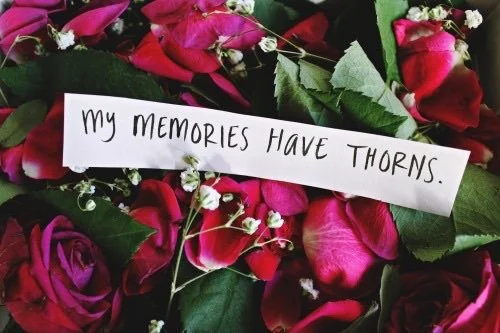
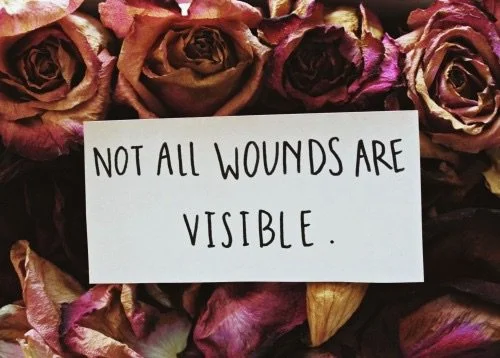
Eventually this project evolved outside of the box, becoming more focused on arrangements and then scanner art. Always with a living or once-living element involved.
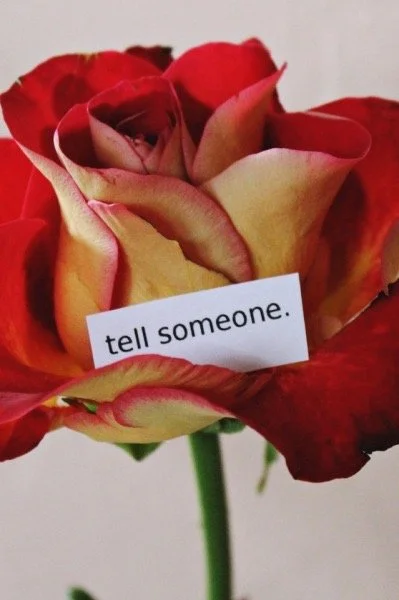
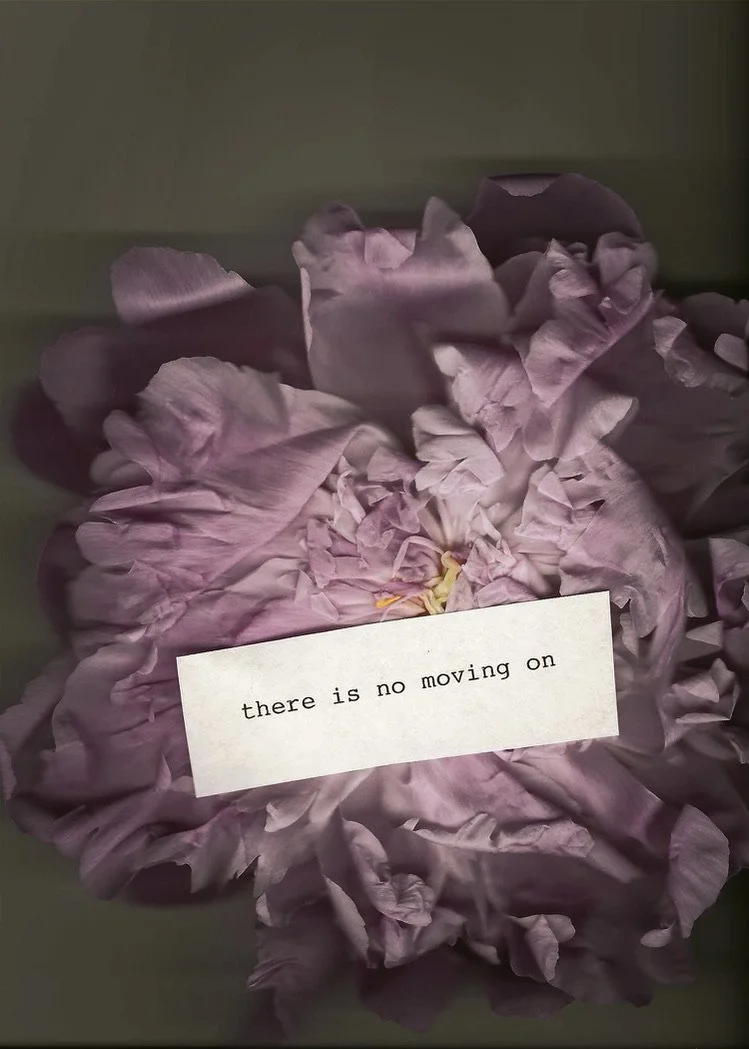
When I was drowning in my grief, I would try to remind myself that I would survive to live the day that I am living right now. I wish I could go back and tell myself that I would be okay. I cannot do that, so the next best thing is to share it, in case it resonates with anyone else. Maybe this will stay with you when it’s your time to grieve someone.
Thank you for reading this. I do not share this about myself so that my own experiences engulf the work I do, but to acknowledge that these experiences are always in the room with me, wherever I go. Your responses to grief are allowed to be different from mine, to look and feel however they look and feel. My hope is that we can all make something of what has happened in our lives. That we can be willing to let grief change us, that we may even trust in the place it takes us.