
Fidelity in Presence: Therapy 🤝 Poetry
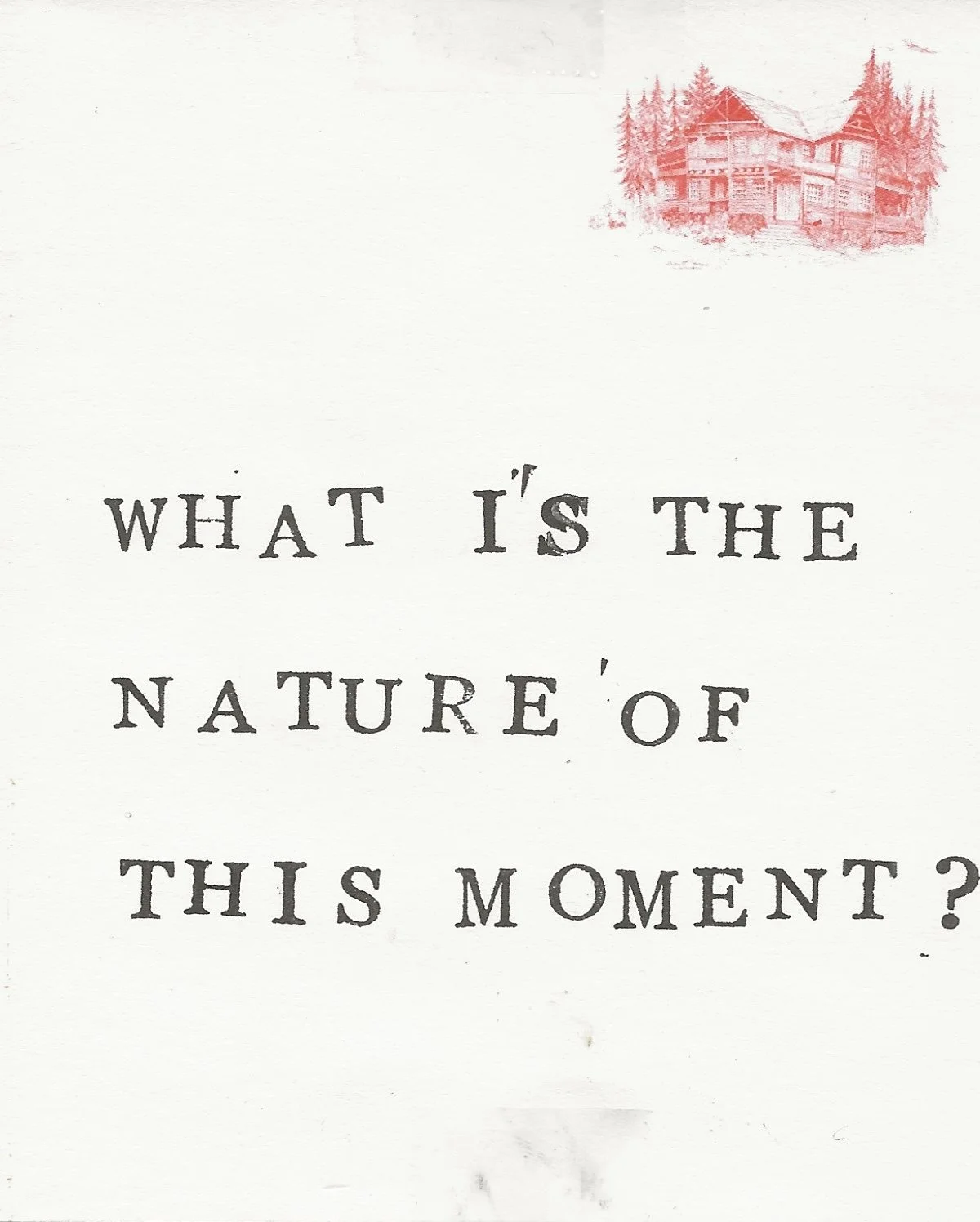
Good poetry and good therapy make the same requests: slow down, notice, and open up to what is actually here.
I know. We are not living in a poetic time. The conditions of reality for many of us are faster and more and boilerplate and flat and optimized. We are on a daily IV drip of stimulation, preventing boredom, contemplative pause, and felt grief that is any true measure of the collective suffering we are actually going through. Emotion flits to and fro, showing up like an annoying tickle at the back of the brain. What was it, anyway? Dread? Enjoyment? Threat of total annihilation? Attention bounces.
Uninformed and often without clear consent, we are trained into invulnerability–not the indestructible kind, but the kind that eats away in increments, dissolves the spine, makes exposure to the common, but harder, parts of humanity (conflict, grief, pain, constructive feedback) feel nearly intolerable. We are deceived, led to believe that this is what experience is meant to be. A ripple in the pond becomes a sign of trouble rather than natural cause-and-effect. Distracted and pulled apart like taffy, real life plays out in the periphery.
Jane Hirshfield’s writing bolsters the view that “entering the mind of poetry” as a form of concentration “brings us to a deepened coherence with the world of others and also within the many levels of the self.” This offers some room to wiggle. One need not be particularly skilled in reading or writing poetry. One only needs to pay attention, then be willing to be moved by nothing in particular.
Hirshfield writes, “Leaving the refuge of silence demands the willingness to be seen, to be judged. It demands that we turn away from our desires to please, to fit in, to spare the feelings of those we love, and also from our desire to create a shapeliness that does not reflect how awkward, unfinished and ambivalent actual experience is.”
Religious historian Mircea Eliade argued, “To find yourself, talk to a stranger.” The therapist is the stranger, therapy the departure from silence.
Actual experience = actual life. Actual life, which cannot be accurately perceived by manicuring it, which cannot be lived by avoiding it. “A poem,” Hirshfield writes, “is a detour we willingly subject ourselves to, a trick surprising us into the deepened vulnerability we both desire and fear. Its strategies of beauty, delay, and deception smuggle us past the border of our own hesitation.” She adds, “There is reason to fear: a great poem, like a great love, challenges our solitude, our conceptions, the very ground of being.”
Notice the verbs accompanying truth and attentiveness, notice the absence of implied brokenness, necessity for elimination, or demand for normalcy. The poetic mind remembers that what is incomplete is compelling. To write is to crack something open without looking away. What is written about must be stayed with, lingered upon. Transformation is catalyzed not by improvement, but through the embrace of complexity and the many paradoxes inherent in being human.
To stumble, to give form, to name, to describe–all acts taken when slouching toward the real. Metaphor acts not as mere decoration, but a way for truth to speak for itself in movement, as part of the fabric of the natural world. The mechanics of poetry offer a vessel to navigate the unspeakable without becoming engulfed. When “I am depressed” is allowed to also be “There is a vacuous gulf in me”, the imagination remembers that pain is not a defect, but an effect of traversing the terrain of experience.
And, perhaps, I am crossing a gulf someone has crossed before. Creativity reveals the silo for the illusory and unnatural barrier that it is. Resonance can be found when reading a poem by someone who has been dead a whole lifetime before their words found a home. You can write that poem.
When depression becomes a gulf, distance is granted for observation. A relationship can develop. Now that what I am looking at is a body of water, not a problem, what do I notice? What is interesting about it? If I write it off as a simple chemical misfire, I learn nothing, it exists for nothing. And yet the energy it takes for me to cross it still drains me of my vitality without understanding why. “Often, the stories we hold about self and the world are subliminal, wielding the power of the unexamined, and thus go unquestioned. But the shaping of art is also a way such hidden narratives are softened, made workable; it brings them into a kind of attention that reaches both conscious and unconscious minds,” Hirshfield writes.
The poetic mind releases us from the demand for answers and returns us to mystery. “Symptom reduction” is an indicator of successful therapy when the definition of health is stripped of all complexity, whereas indications of health for the poetic mind expand to include awe, wonder, sorrow, rage, grief, reverence, even despair. Because all of these arise from engagement in life itself, not life as we wish it would be. Events that most startle us into our aliveness leave behind burdens that many of us have no other choice but to learn how to bear. On this note, Hirshfield contributes this: “For those willing to let themselves feel it, any story leaves behind an uneasiness, sometimes at the center, other times at the edge of perception, and like the remainder left over in a problem in long division, it must be carried. Literature’s work, and particularly poetry’s, is in part to take up that residue and remnant, to find a way to live amid and alongside the uncertain.”
So this very quick, cruel, and small-hearted time we are living in is unlikely to reward the poetic mind for its slow insights. That’s partly why it’s so difficult, and all the more reason to inhabit it. Consider that you already carry what cannot be divided. What did the poets who came before you have to say about it? If you are currently in therapy or thinking about it, how can it function as a space for you to be with what is and not an escape from it?
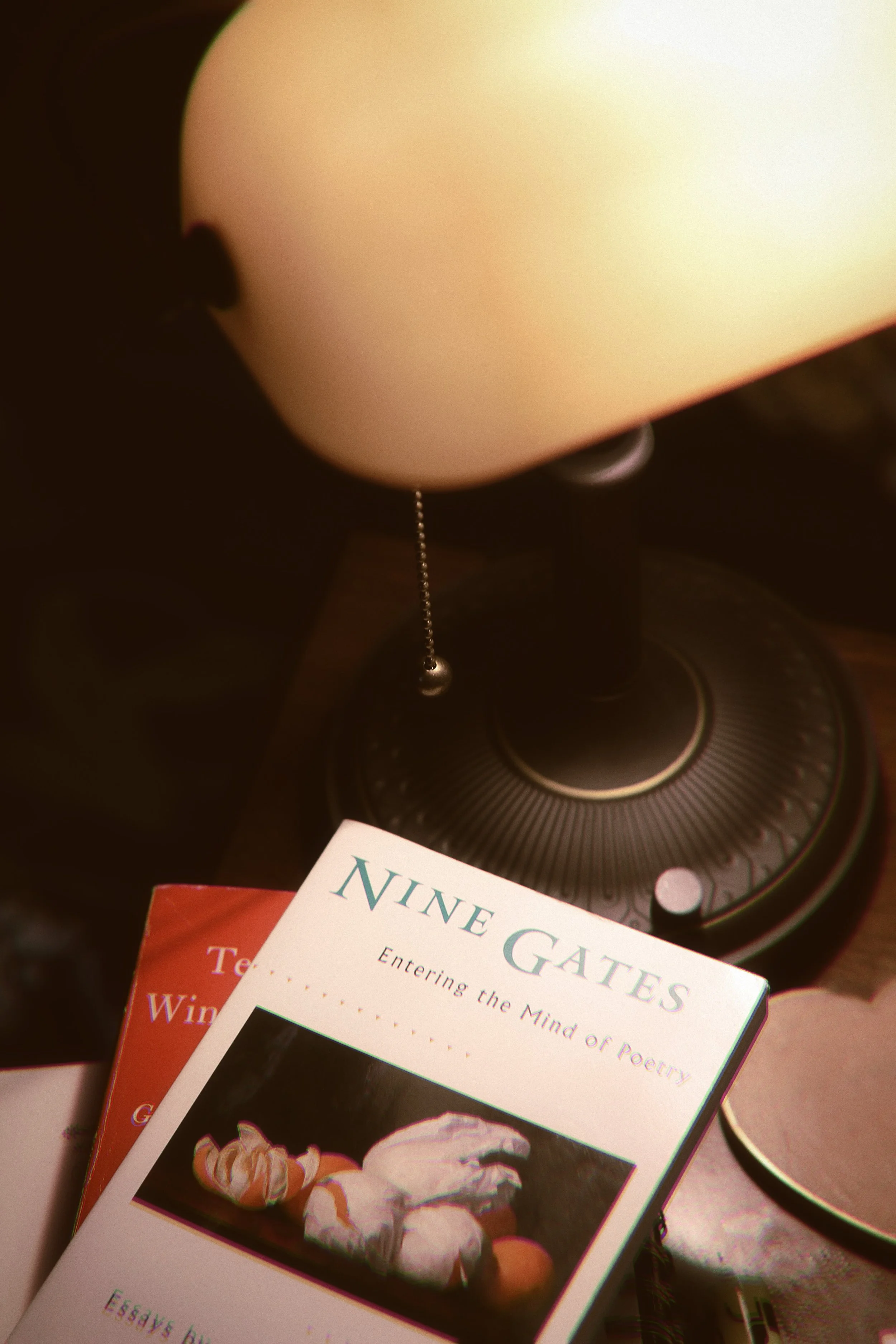
Find Jane Hirshfield’s collected works here.
Author’s Note: This is written from the perspective of a poet, reader, and therapist, focusing on the intersection points of all three states of being. In order to be a Poetry Therapist, it requires programmatic training and certification. I disclose that I do not have this certification nor claim this specialty.